





If different products are prepared in the same powder mixer during the day, every recipe change means a cleaning step. If product left over from the previous batch gets into the next one, colour, taste or composition may change. In food production, residue from a product containing allergens is a serious safety issue. In this article, we explain how to plan and speed up powder mixer cleaning.
Cleaning Starts with Complete Discharge
The less product remains in the vessel, the shorter the cleaning. The discharge method is therefore the first design feature that directly affects cleaning:
- In conical mixers, the cone-shaped outlet allows the product to discharge with minimal residue.
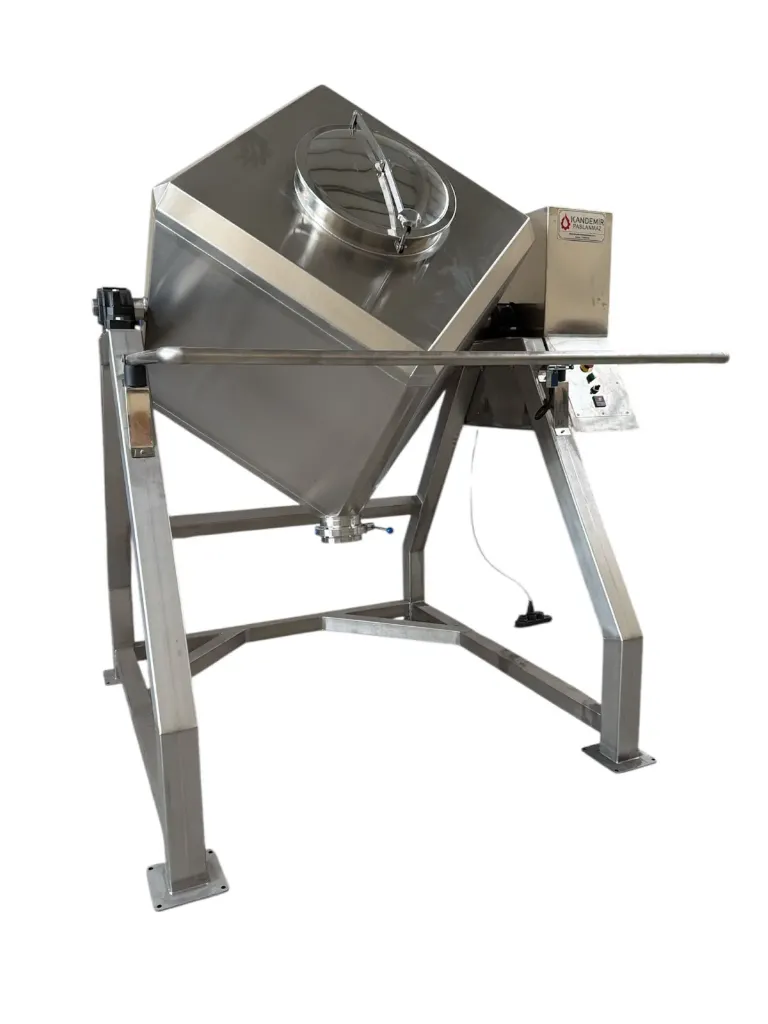
- In cubic mixers, the tilting body enables fast and complete emptying.
- In V-type mixers, the body is discharged by bringing it into a vertical position.
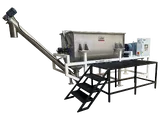
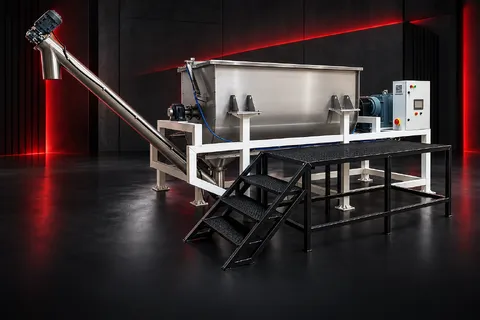
- In horizontal ribbon mixers, a wide discharge gate under the vessel discharges the product quickly, and cleaning covers make it easier to access the vessel.
Dry Cleaning or Wet Washing?
In dry powder production, cleaning is mostly done dry: remaining product is removed with a brush, scraper or industrial vacuum. Dry cleaning is fast and leaves no moisture in the vessel.
Wet washing is needed where dry cleaning is not enough, such as allergen changeovers, sticky or oily products and coloured pigments. After wet washing, surfaces must be dried completely. Moisture left in the vessel causes lumps to form in the next batch. Combined with chlorinated cleaning agents, it also increases the risk of corrosion in stainless steel.
Where Residue Hides
The points most often overlooked during cleaning are those where the product is not directly visible:
- Cover seals and the edges of the feed opening
- The inside of the discharge valve or gate
- In horizontal ribbon mixers, the points where the ribbons join the shaft and the shaft seal area
- Welds and internal corners
A vessel with polished, smooth interior surfaces and properly finished welds does not retain product at these points and noticeably shortens cleaning.
Plan the Production Sequence Around Cleaning
One of the most effective ways to shorten cleaning time is to produce recipes in the right order. Common practices in the industry include:
- Moving from light-coloured to dark-coloured products
- Moving from mildly flavoured to strongly flavoured products
- Producing allergen-free products before those containing allergens
This way, dry cleaning alone may be sufficient for changeovers within the same product family, and full cleaning requiring wet washing can be left until the end of the day or shift.
Safety
Before cleaning begins, the machine must be stopped and isolated from its power supply. In mixers with a rotating body, the body must be secured so that it cannot move during cleaning. The safety sensors and barriers on our mixers prevent access to moving parts during operation. However, they are not a substitute for these precautions during maintenance and cleaning.
Cleaning Frequency Affects Machine Selection
If you change recipes frequently, cleaning time is as important a criterion as mixing time when choosing a machine. A mixer that discharges with minimal residue and gives easy access to the vessel reduces downtime during the day. You can read our guide to choosing a powder mixer, which compares the different types, and browse our powder mixer models.