





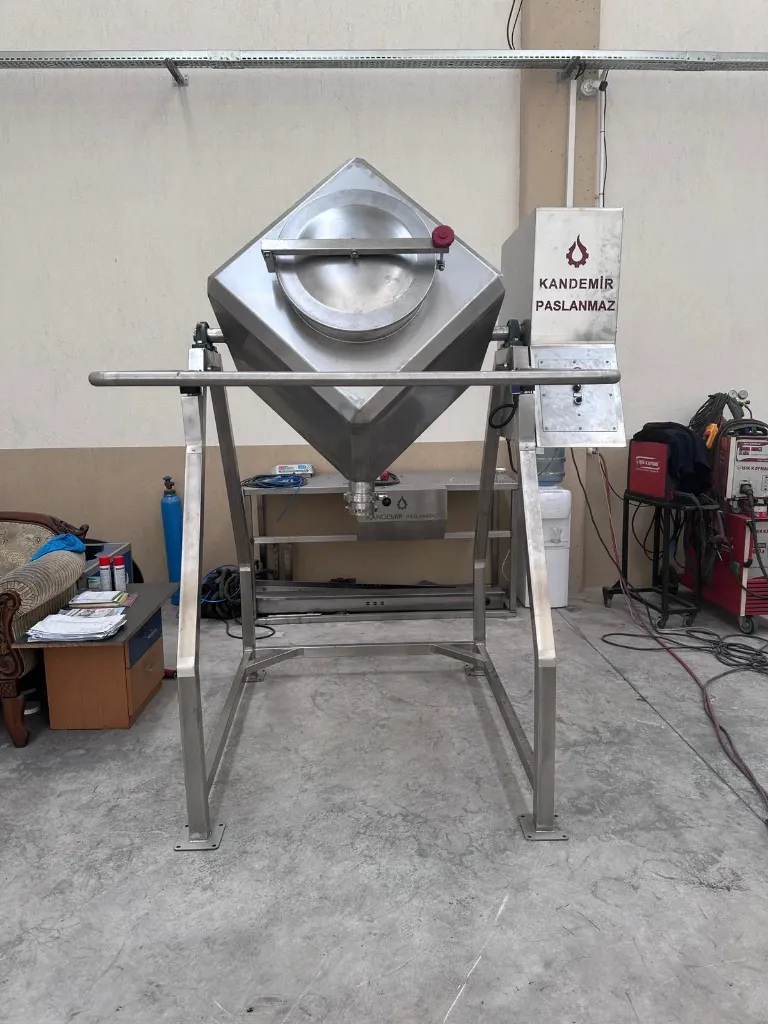
How does a cubic mixer work?
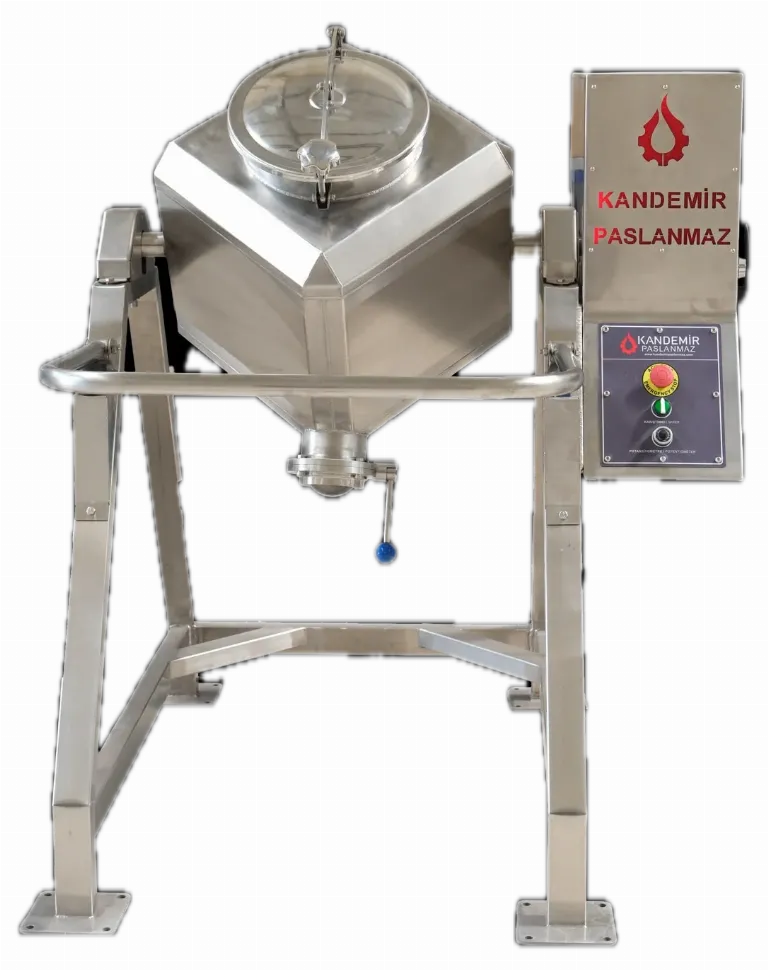
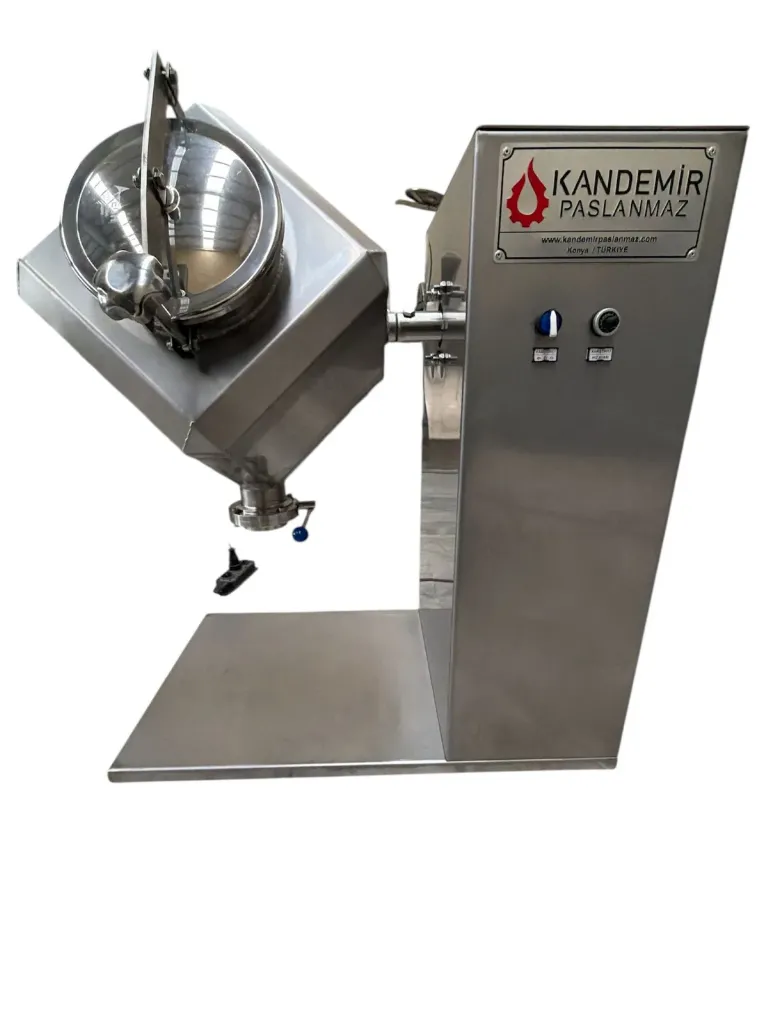
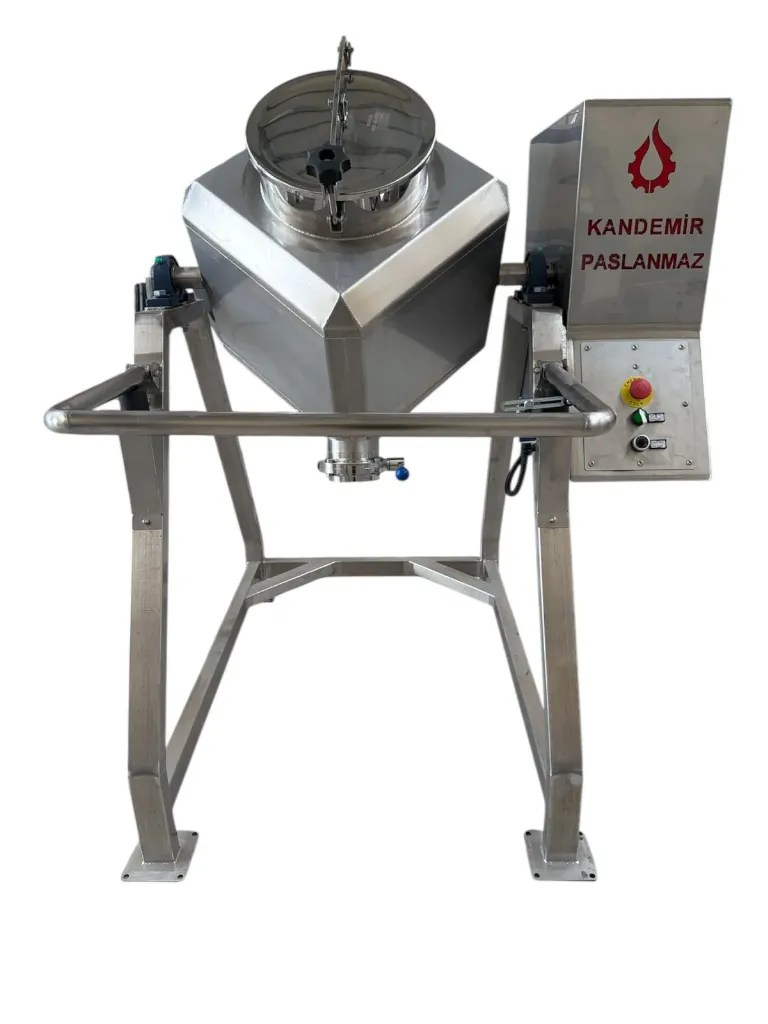
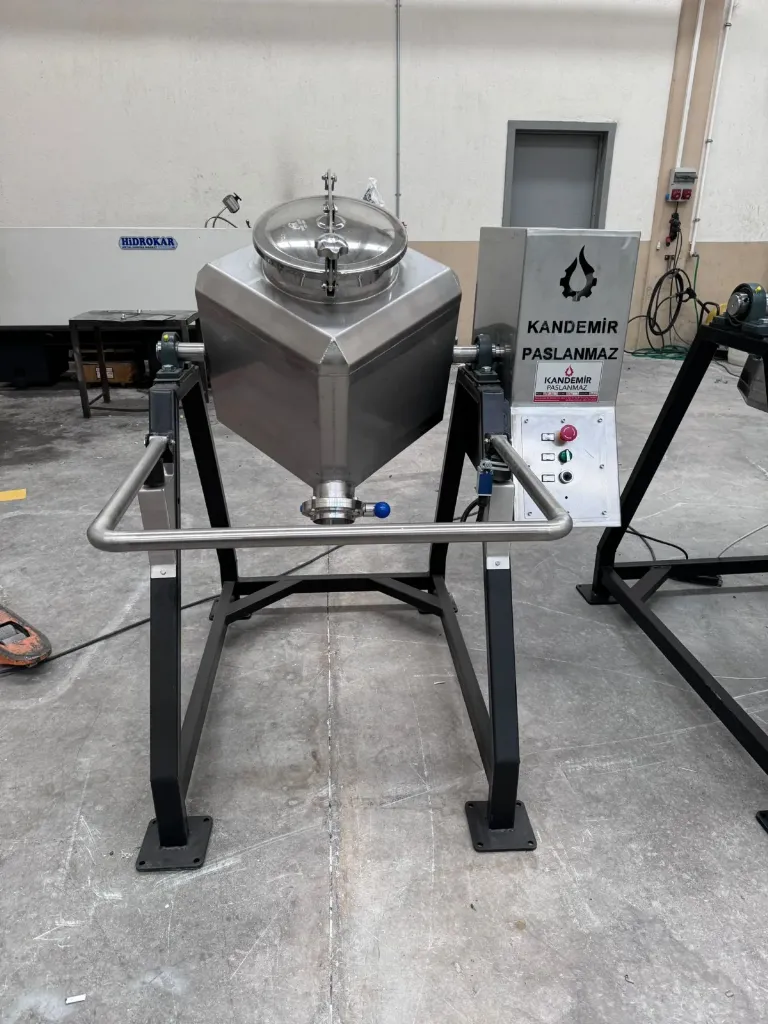
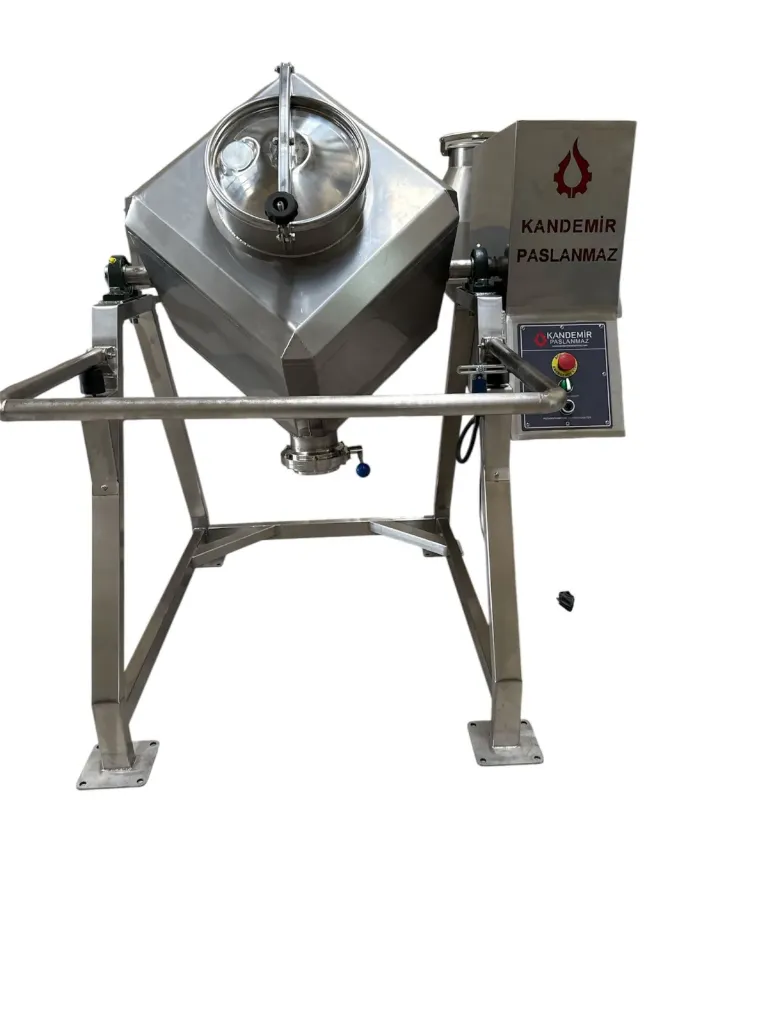
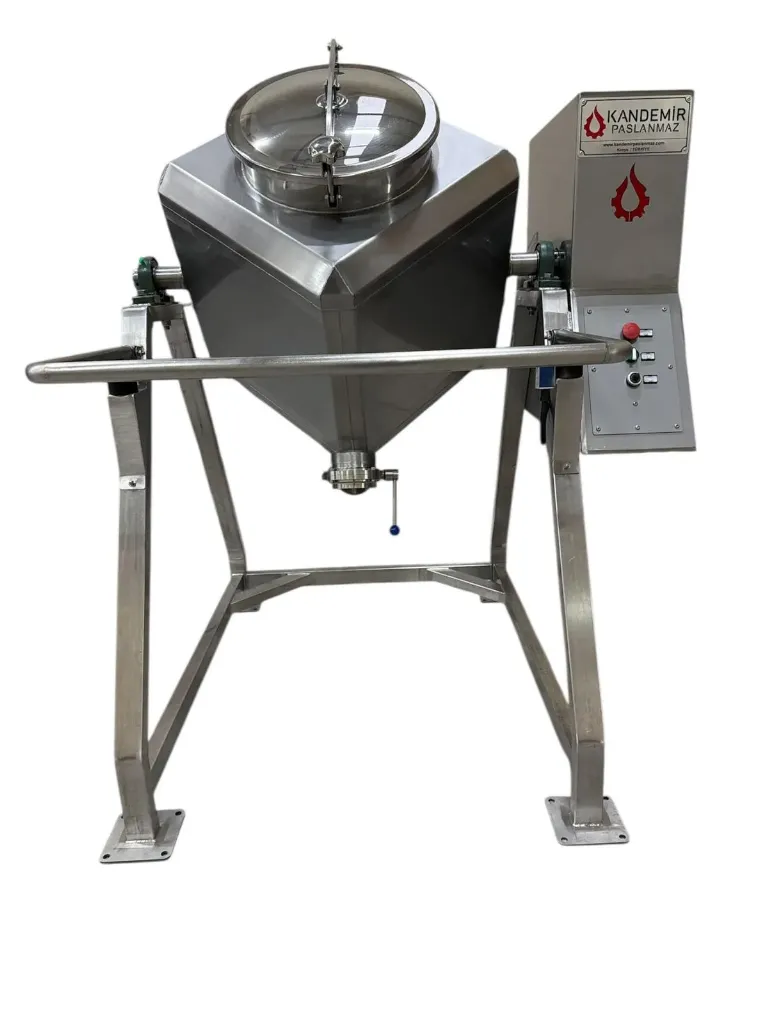
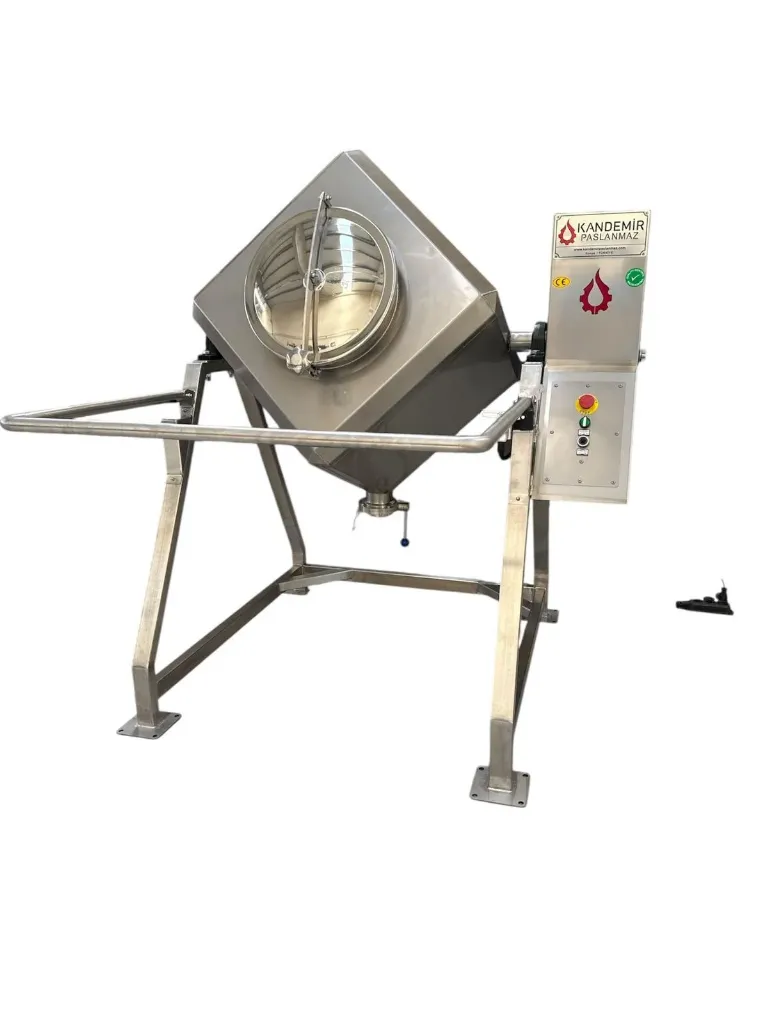
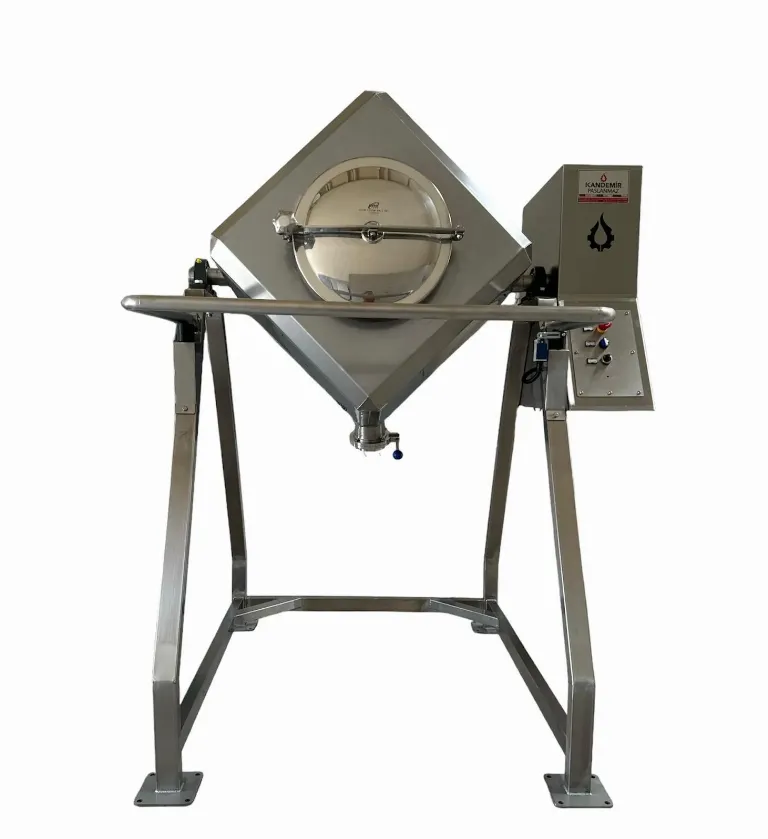
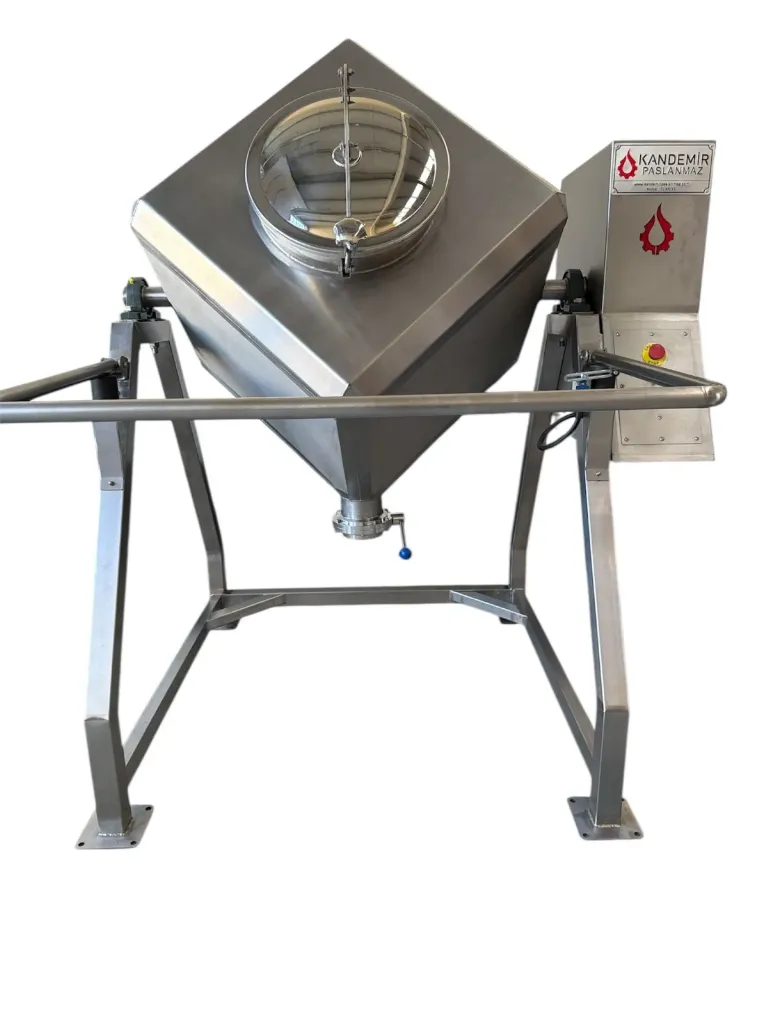
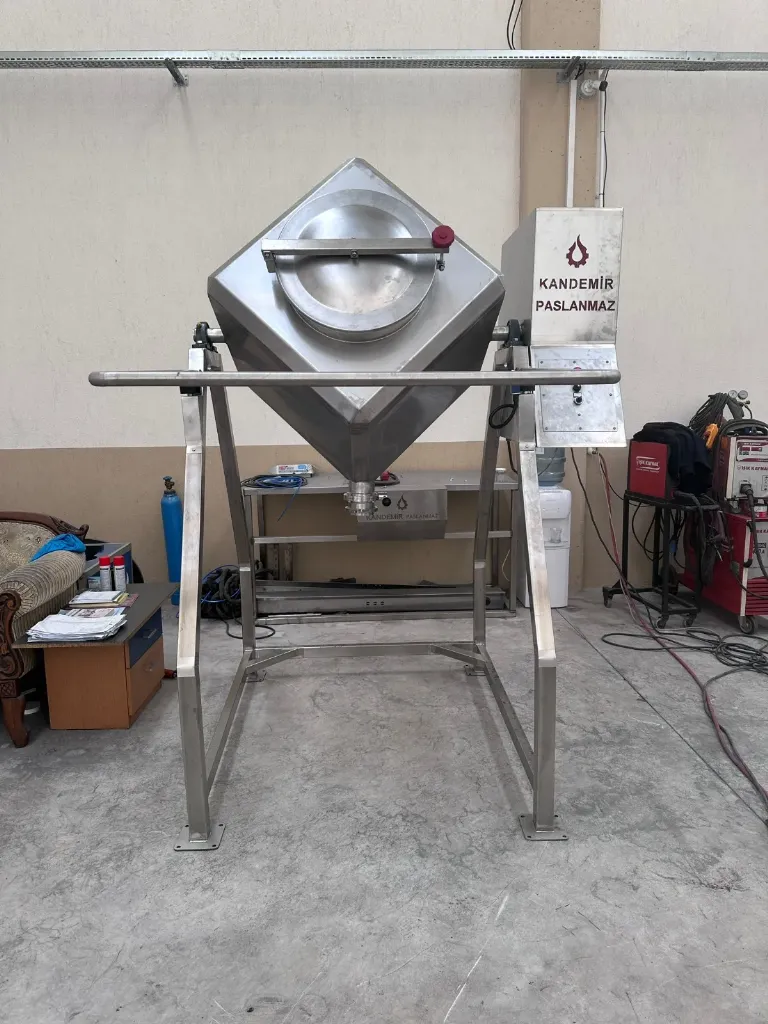
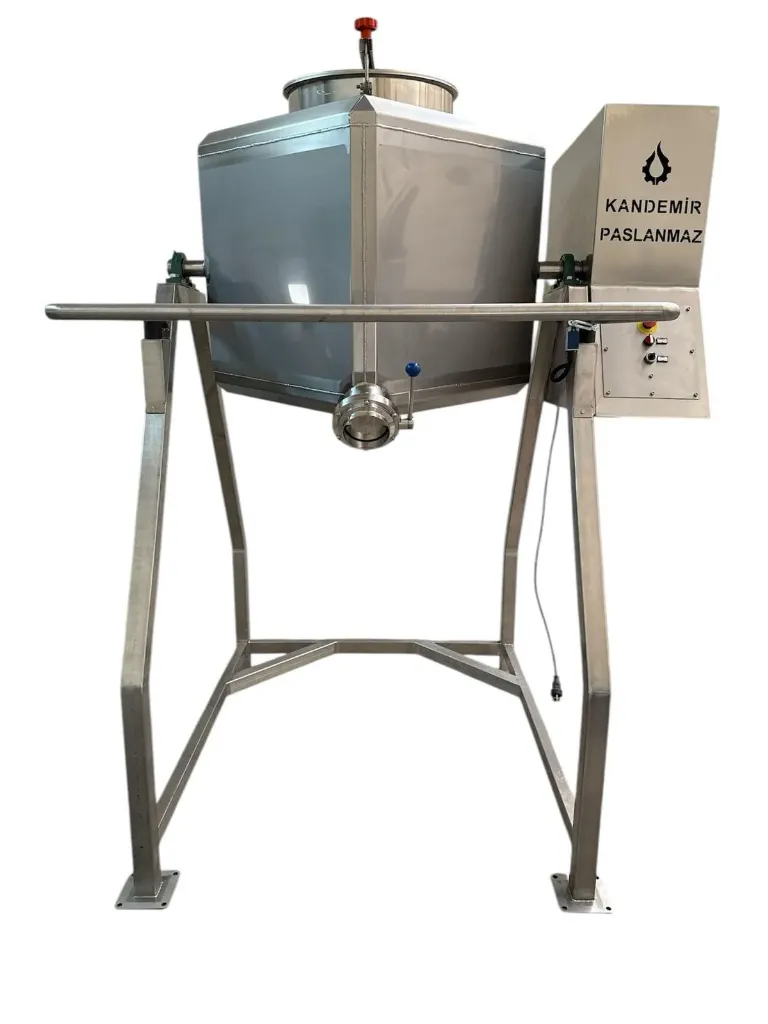
In a cubic mixer, also called a cube blender, the product is blended inside a cube-shaped vessel rotating around its axis. As the vessel turns, the product strikes the corners and faces of the cube and moves up and down and from side to side, in other words in all directions. This movement distributes powders of different densities and particle sizes evenly even at low speed, and since no blade pressure is applied, fragile raw materials are protected as well.
Capacity and models
We build the KP-KTK series from 30 to 2,000 litres with motor power from 1 to 15 kW. Our standard models range from 50 to 1,500 litres; other volumes are built to order. For R&D and sample work, the KP-KLTK laboratory cubic mixer is also available.
Equipment and options
- Material: Vessel in AISI 304 stainless steel, AISI 316 on request; smooth interior surfaces that are easy to clean.
- Controls: Integrated electrical control panel and adjustable rotation speed, so mixing can be controlled according to the product type.
- Safety: Braked motor and sensor-supported safety stop system.
- Discharge: Quick and complete discharge thanks to the tilting vessel, with low product loss.
- Layout: Compact design that is easy to install in limited spaces.
How to choose the right capacity
A cubic mixer is never filled completely, so that the product can move freely inside the cube; usually 40–60% of the total volume is used. The bulk density of the product is used to convert batch weight into volume:
- Example: A 200 kg batch with a bulk density of 0.8 kg/L has a volume of 250 litres.
- For a fill level of about 50%, a 500 litre model is suitable.
Where recipes change often, working with several smaller batches can be more flexible than one large batch; we review your batch plan together with you.
Which products is it suitable for?
Cubic mixers stand out in recipes that combine powders of different densities in precise ratios and in production with frequent product changes:
- Food: spice and coffee blends, flour additives, protein powders
- Pharmaceuticals: active ingredient blends before tableting
- Chemicals and cleaning: powder chemicals, plastic and paint additives, cleaning products
- Cosmetics: face powders, mineral powders and cream additives
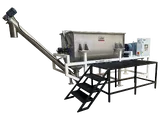
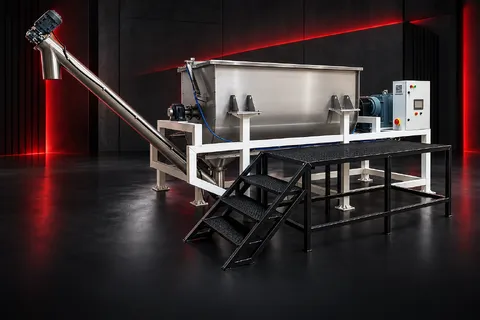
For very large batches and paste-like products, a horizontal ribbon mixer, and where fast, residue-free discharge is the priority, a conical mixer can also be considered. You can also read our article on cubic powder mixers, where we explain the working principle in detail.
Share your raw material and target capacity with us to request a quote.