





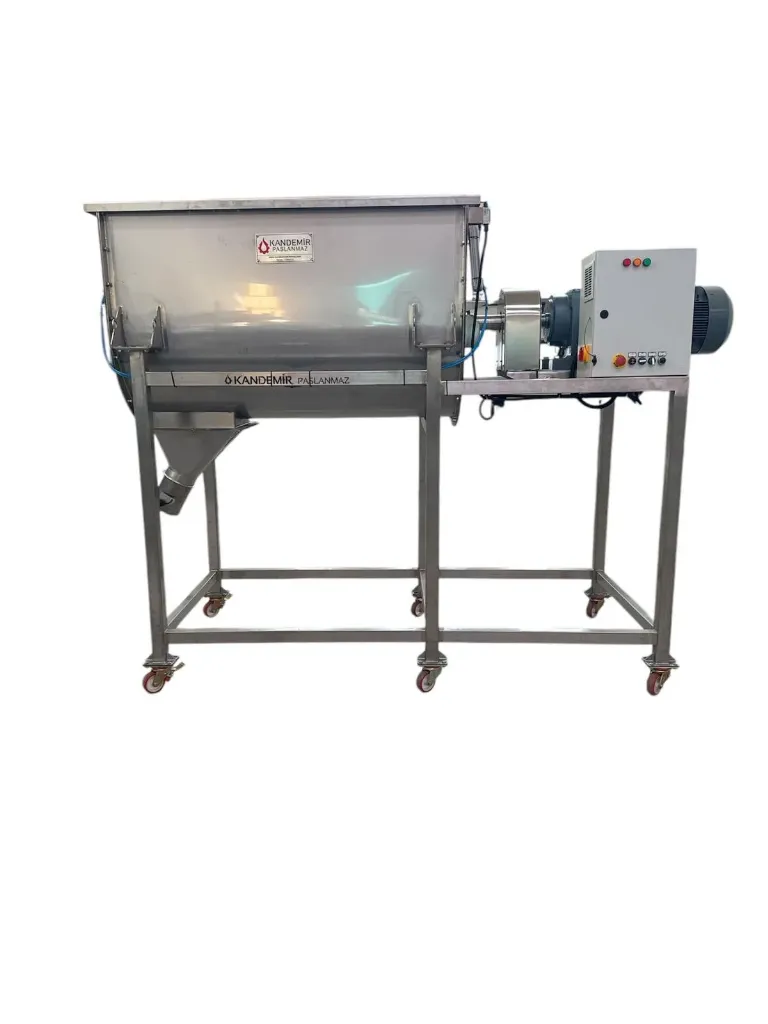
How does a horizontal ribbon mixer work?
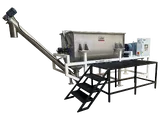
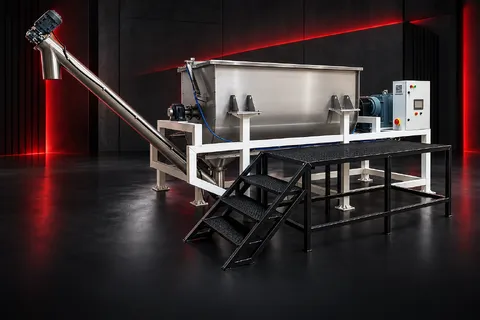
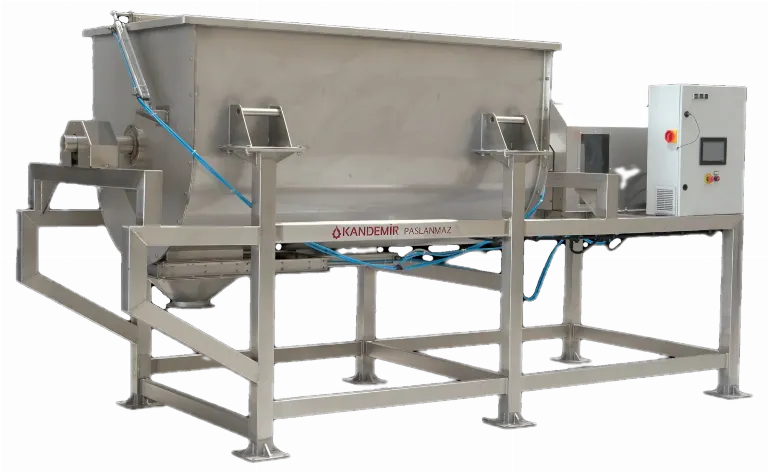
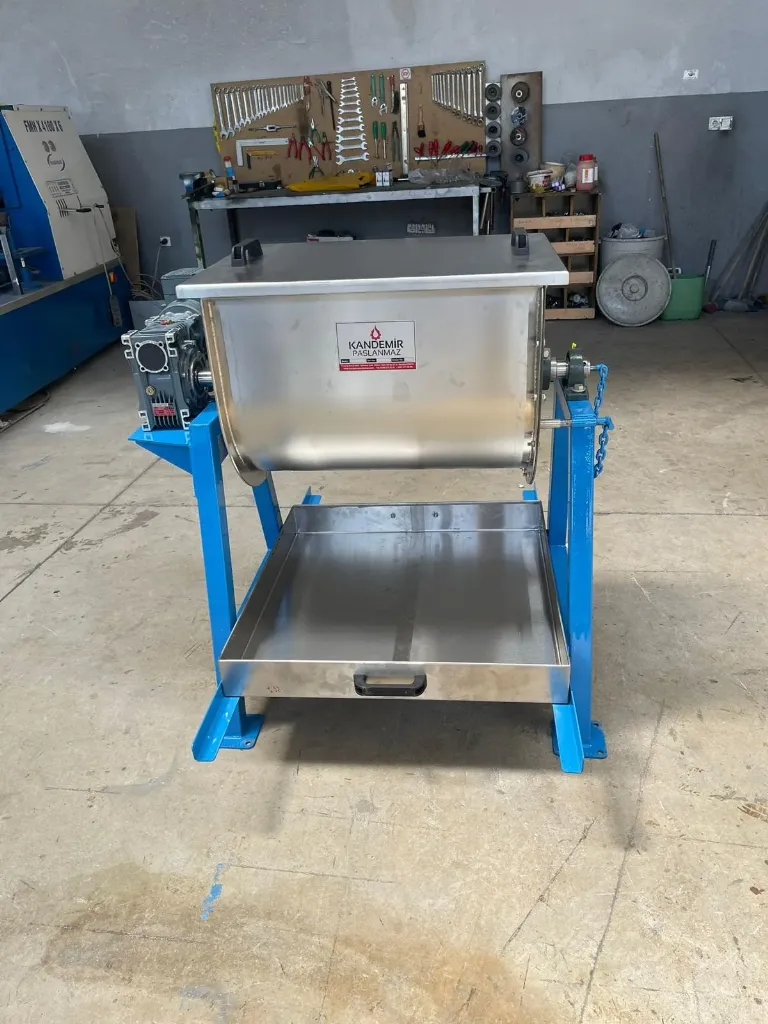
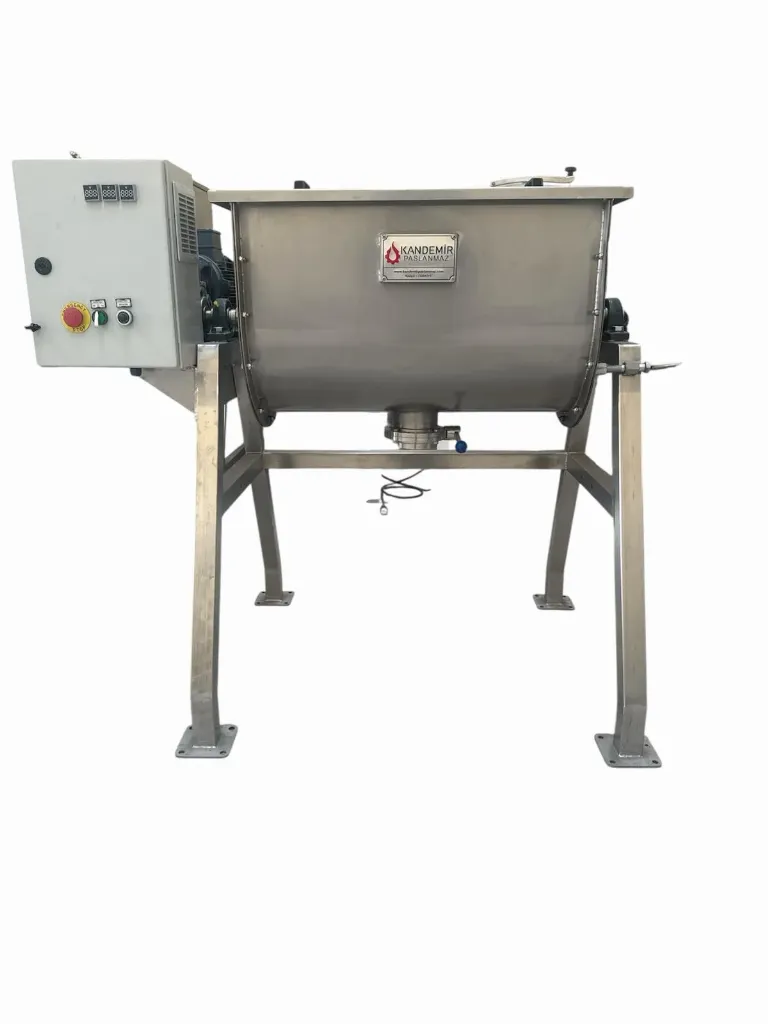
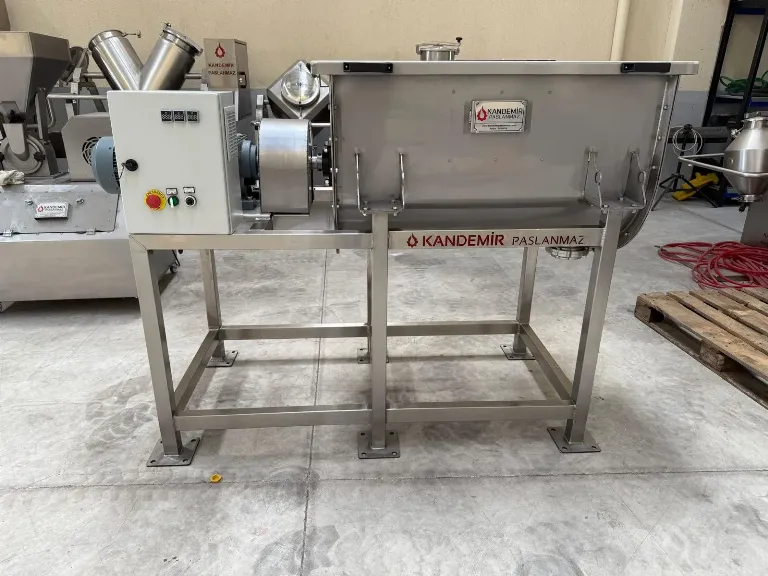
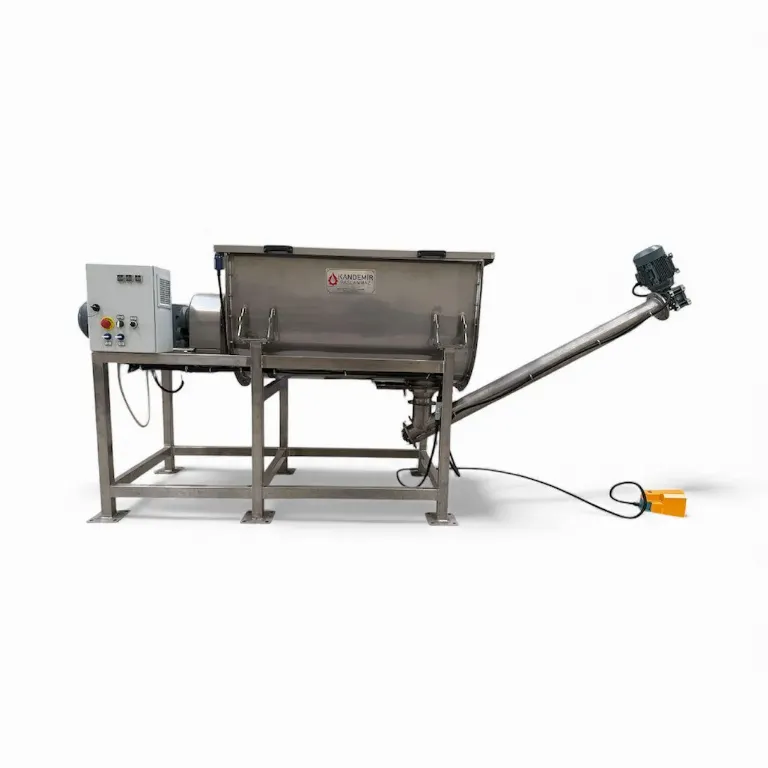
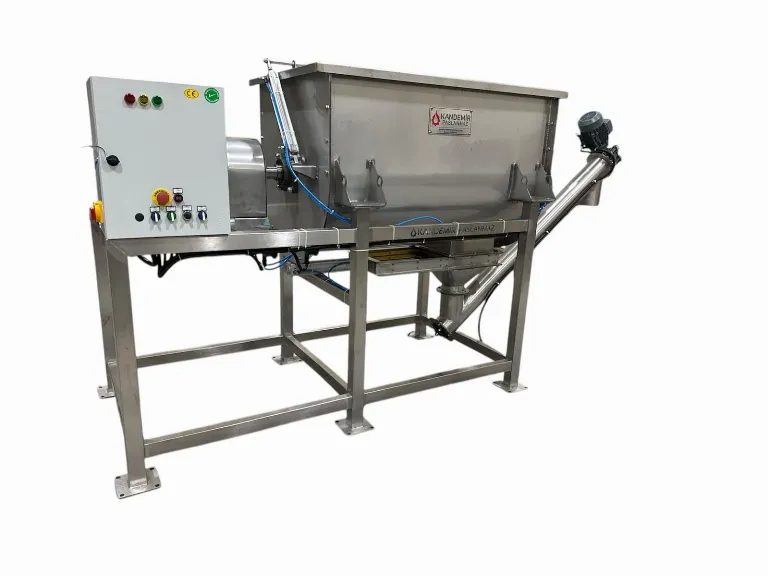
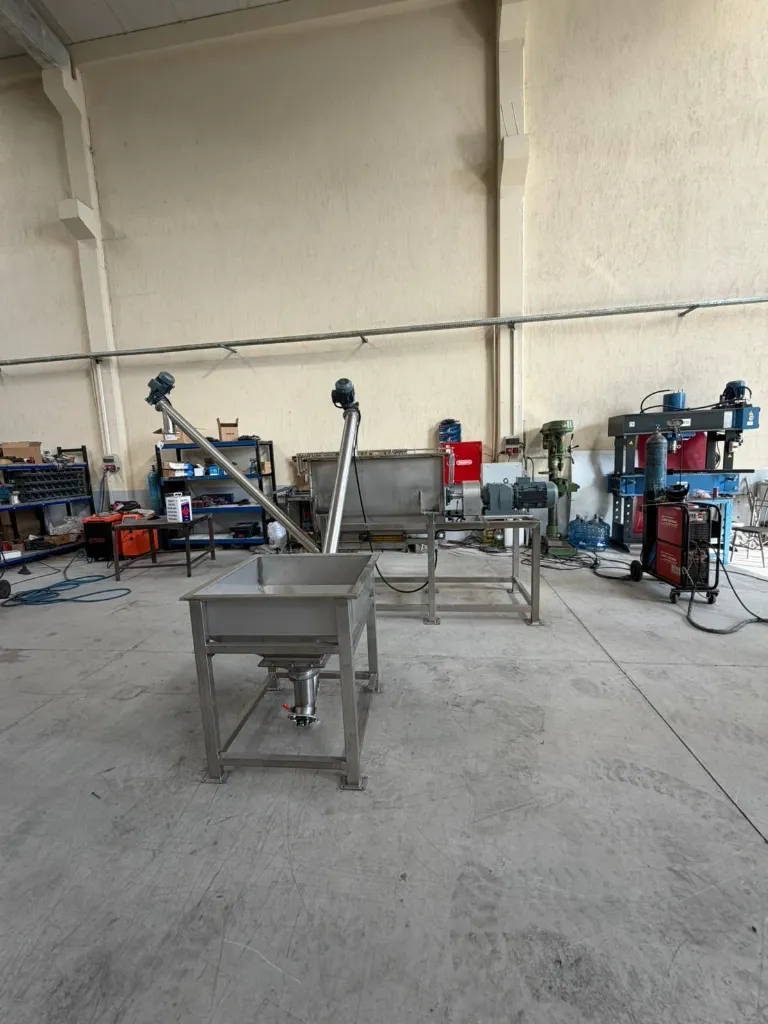
In a horizontal ribbon mixer, also known as a ribbon blender, the product is blended by a double helical ribbon rotating inside a fixed, U-shaped trough. The outer ribbon moves the product from the trough walls towards the centre, while the inner ribbon pushes it from the centre back towards the walls. This counter-flow creates continuous circulation throughout the trough and delivers a homogeneous blend in a short time, typically 5–20 minutes, even in large batches.
Capacity and models
Standard models of the KP-YTK series range from 75 to 6,000 litres; for larger batches we build custom machines of up to 10,000 litres. Motor power ranges from 3 to 55 kW depending on capacity. For R&D and trial production we also offer a laboratory model working on the same principle.
Equipment and options
- Material: Trough and agitator shaft in AISI 304 stainless steel, AISI 316 on request.
- Discharge: Wide, manually or pneumatically operated discharge valve at the bottom centre of the trough; the product empties quickly with little residue.
- Sealing: Packing gland or mechanical seal systems, especially for blends with liquid additives.
- Heating and cooling: Optional jacket to keep the product at the required temperature during mixing.
- Liquid addition: Optional spray system for even distribution of liquid additives.
- Cleaning: Cleaning hatches for quick access to the trough.
How to choose the right capacity
The nominal volume of a mixer is not the same as the quantity it can mix per batch. To let the ribbons circulate the product freely, the trough is usually filled to 40–70%. The bulk density of the product is used to convert batch weight into volume:
- Example: A 600 kg batch with a bulk density of 0.6 kg/L has a volume of 1,000 litres.
- For a fill level of about 60%, a 1,500–2,000 litre model is suitable.
We define the batch size together with you, taking your daily production target, mixing time and filling line speed into account.
Which products is it suitable for?
A horizontal ribbon mixer handles not only free-flowing powders but also granules, slightly moist blends, blends with liquid additives and paste-like products. That makes it the main machine of high-volume production lines:
- Food: bakery mixes, spices, coffee, instant soups and dry foods
- Agriculture and feed: animal feed and fertiliser blends
- Chemicals and cleaning: detergents, paints and pigments, construction chemical additives
- Pharmaceuticals and cosmetics: granule pre-blends, powders and mask bases
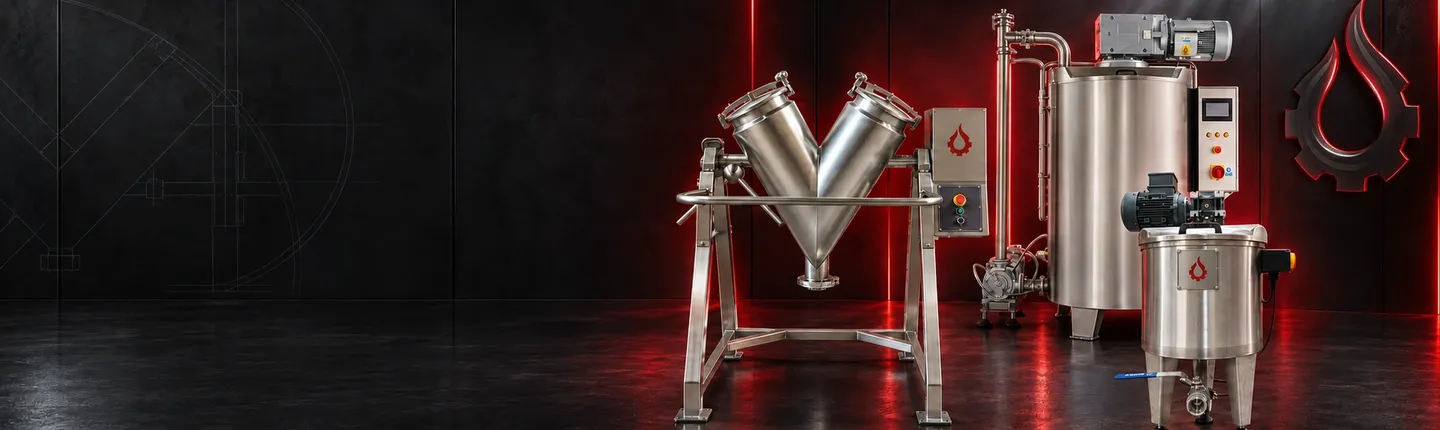
Because the ribbons move the product mechanically, the ribbon speed must be set correctly for very fragile granules; for such products, V-type or cubic mixers with a rotating vessel are a gentler solution. You can also read our article on horizontal powder mixers, where we explain the working principle in detail.
Share your raw material and batch size with us to request a quote.